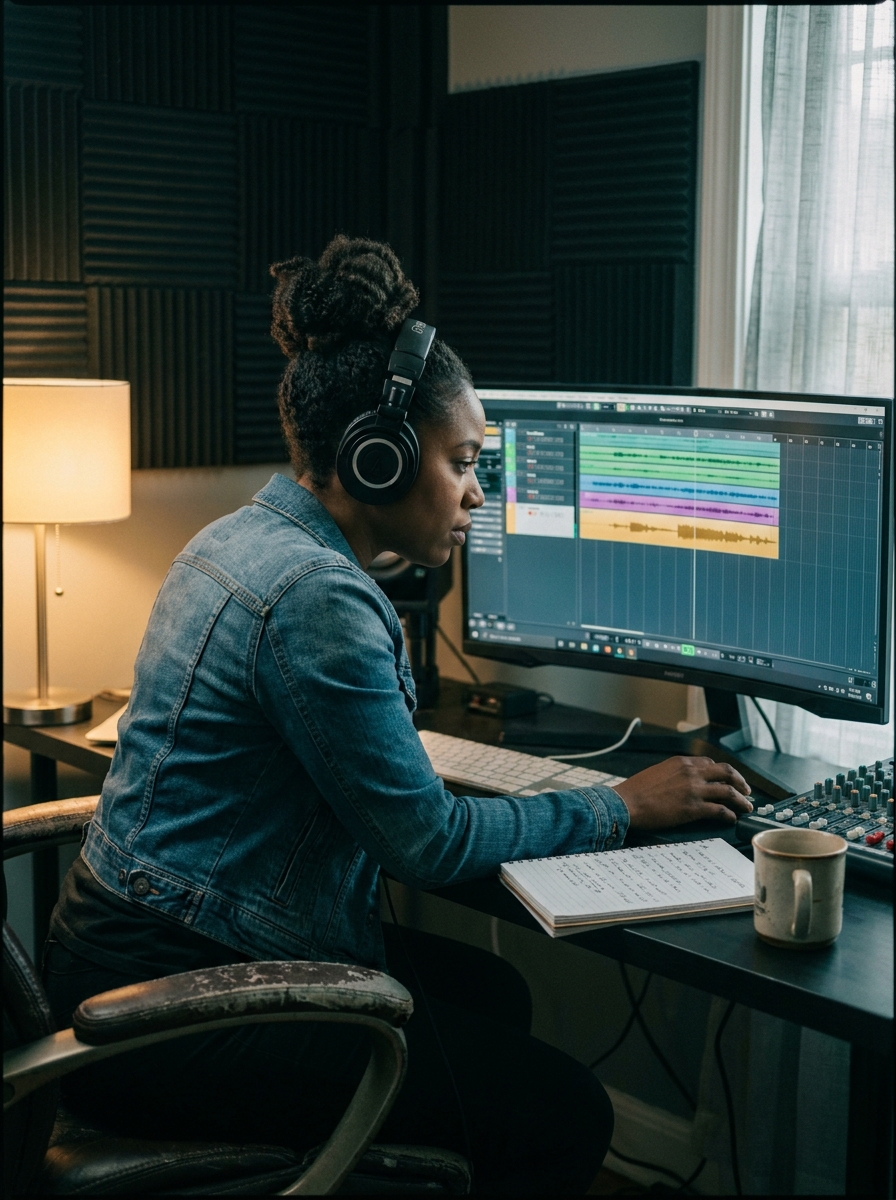
For Solo Hosts, Indie Podcasters & Network-Pickup Shows
Music for podcasters. Music that grabs their attention and helps brand the show.
Real music licensing for the people making the show — theme music, beds, and stingers cleared for monetized episodes, sponsorship reads, and the platform distribution your audience actually grows on. Cleared at the source, no rights surprises when the show wins.
Networks and shows that license our music.







How licensing works
Three steps. Clean, clear and simple.
- Step —01
Browse
Search the catalog by style, mood, use, instrumentation, tempo and duration or use Jessica, our AI music supervisor for assistance. Preview the results in seconds.
- Step —02
License
Direct purchase and download include nearly all licensing you will need, with the exception being in-theatre film release. Subscription-based licensing is covered by an annual blanket license.
- Step —03
Use
After payment is received for direct purchase or subscription purchase, you will have the appropriate licensing documentation in hand. You are clear to sync the music with your production.
How the library works for you
Nearly every title, ready for the scene.
Nearly every title in the catalog works the same way, built so the version you need already exists.
- 01
The full theme, plus alternates
Each title includes a theme version with all the instrumentation, and usually alternate versions with less instrumentation for quieter moments in the scene.
- 02
Broadcast lengths, included
Most titles include edits at common broadcast lengths of 60, 30, 15, and stingers, plus versions separated by sections or parts.
- 03
One standard license
The standard license covers nearly every use. The only exception is theatrical release, which requires an additional license. Contact us with a request for quote and we will respond quickly with a license that meets your requirements.
What licensing looks like for podcasters
Rights written for the way an indie show actually grows.
- 01
One License, Every Platform
Your scope covers Spotify, Apple Podcasts, YouTube, Amazon, and the long tail of podcast players the show eventually distributes to. Master and publishing clearance handled at the source — the same license carries forward when you migrate hosts or syndicate to a network.
- 02
Cleared for Monetized Episodes
Sponsored episodes, ad-supported feeds, Patreon-paywalled bonus content, podcast network revenue share — all standard scope. The license is written for the show's monetization model, not the listener tier the episode happens to drop on.
- 03
A Deep Catalog for the Show's Identity
Sixty thousand tracks across acoustic, lo-fi, electronic, ambient, cinematic, and dramatic — the tonal range indie shows live in. The library grows weekly, so your show's signature has room to evolve as the audience does.
- 04
One License That Covers Everything
Simple and clean — one standard license covers your show, wherever it goes. The only exception is theatrical release, which requires an additional license.
Proof
GMP by the numbers — for podcasters
- in production music
- Since 1986in production music
- tracks cleared for podcast use
- 60Ktracks cleared for podcast use
- standard license covers nearly every use
- Onestandard license covers nearly every use
- catalog growth across genres
- Weeklycatalog growth across genres
Genres for podcast shows
Five working lanes for the kinds of shows podcasters actually build.
Quirky and comedic is the #1 lane for podcasters — and the rest of the tonal range is right behind it. Each lane cross-links to the full genre catalog, or tell us about your show and we will help you find the music you need.
Funk
Quirky, comedic, and playful — the #1 lane for humor-led and personality-driven shows.
Browse Funk
Acoustic
Intimate, conversational themes for personality-led and interview shows.
Browse Acoustic
Lo-Fi
Warm, restrained beds for solo-host narration and casual long-form formats.
Browse Lo-Fi
Electronic
Modern, tech-forward identities for science, business, and culture podcasts.
Browse Electronic
Ambient
Atmospheric tone-setting for narrative, memoir, and reflective shows.
Browse Ambient
FAQ for podcasters
Common questions before licensing the show.
Yes — monetized use is the default scope, not an add-on. Sponsored episodes, ad-supported feeds, podcast network revenue share, Patreon-paywalled bonuses, and platform monetization programs are all standard. The license is written for the show's monetization model, not the listener tier the episode drops on.
The same theme music and beds carry forward — one standard license covers your show, wherever it goes. If your distribution changes in a big way, tell us about it and we'll make sure the paperwork matches.
Yes. Every track is master and publishing cleared at the source, which is the standard those platforms require. When a routine claim does surface on a platform, it resolves to your license — often in seconds — through the platform's claim-resolution flow.
Yes. The license covers both audio-only and video distribution of the same show, with YouTube monetization included.
Pricing scales by scope: independent shows on free tiers start lower than monetized network shows. Catalog licenses for indie podcasters are priced for the real economics of indie podcasting, with options to license a single theme or a full slate. Tell us about your show and we'll quote the exact scope.
The library spans roughly sixty thousand tracks across every major genre and mood, and grows weekly. If your first search comes up short, tell us about your show and we'll help you find the music you need.
The license covers the podcast and its standard derivative formats — episodes, video versions, monetized distribution, and sponsored use. Standalone resale of the music or use as the soundtrack for a separate, unrelated production falls outside the standard scope. If you have an unusual use, contact us and we'll quote it directly.
About licensing music for podcasters
How licensing actually works for the person making the show.
GMP Music licenses to studios, agencies, and post-production houses — and a growing share of our catalog work is the indie podcaster making the show on their own. Solo hosts, two-person production teams, network-pickup shows that started as side projects, and the long tail of professional indie podcasts that operate on real budgets but not studio budgets. The rights paperwork the podcast eventually needs is the same paperwork a major studio needs. The economics are not. Licensing has to bridge both.
Music licensing for podcasters works the same way it works for any other format: every track is master and publishing cleared at the source, which is the standard Spotify, Apple Podcasts, YouTube, Amazon, and the major ad-network detection systems require for monetized audio. The difference is in the scope. An indie podcast license is written for the show you are actually building right now — the cataloged track, the platforms you distribute to, the monetization model you operate under, and the territories your audience lives in. Sponsored episodes, ad-supported feeds, Patreon bonus content, and platform monetization programs are inside the standard scope, not bolted on as separate clearances.
The license also has to anticipate where indie shows tend to go. Network pickup, brand-partnership deals, video-podcast distribution on YouTube, audiobook spinoffs, live event tours, syndication to international platforms — these are all places indie podcasts grow toward, and the rights paperwork needs to flex with the growth. One standard license covers your show wherever it goes, with the same theme music and beds carrying forward as it grows. When a routine claim does surface on a platform, it resolves to your license — often in seconds — through the platform's claim-resolution flow.
GMP is a licensed production music library. Every track comes with clear documentation and chain of title, so the rights paperwork is settled before the show grows — the day a sponsor signs or a network picks up the show, the license is already in place. Clean, simple, and forever.
Related
Adjacent pages worth a read.
Music for Podcasts
The broader podcast cluster page — theme music, episode beds, stingers, and full-show scoring.
Read
Music for Podcast Intros
The intro-specific landing page — themes, opens, and brand identity cues for the first ten seconds of every episode.
Read
Music for Content Creators
Adjacent page for short-form video creators with parallel licensing needs.
Read
Music for YouTube Creators
Sister cluster page for video-first creators distributing on YouTube.
Read
The license that scales with the show