
Cross page · Horror × Trailers
Horror music for trailers. Dread, dissonance, design.
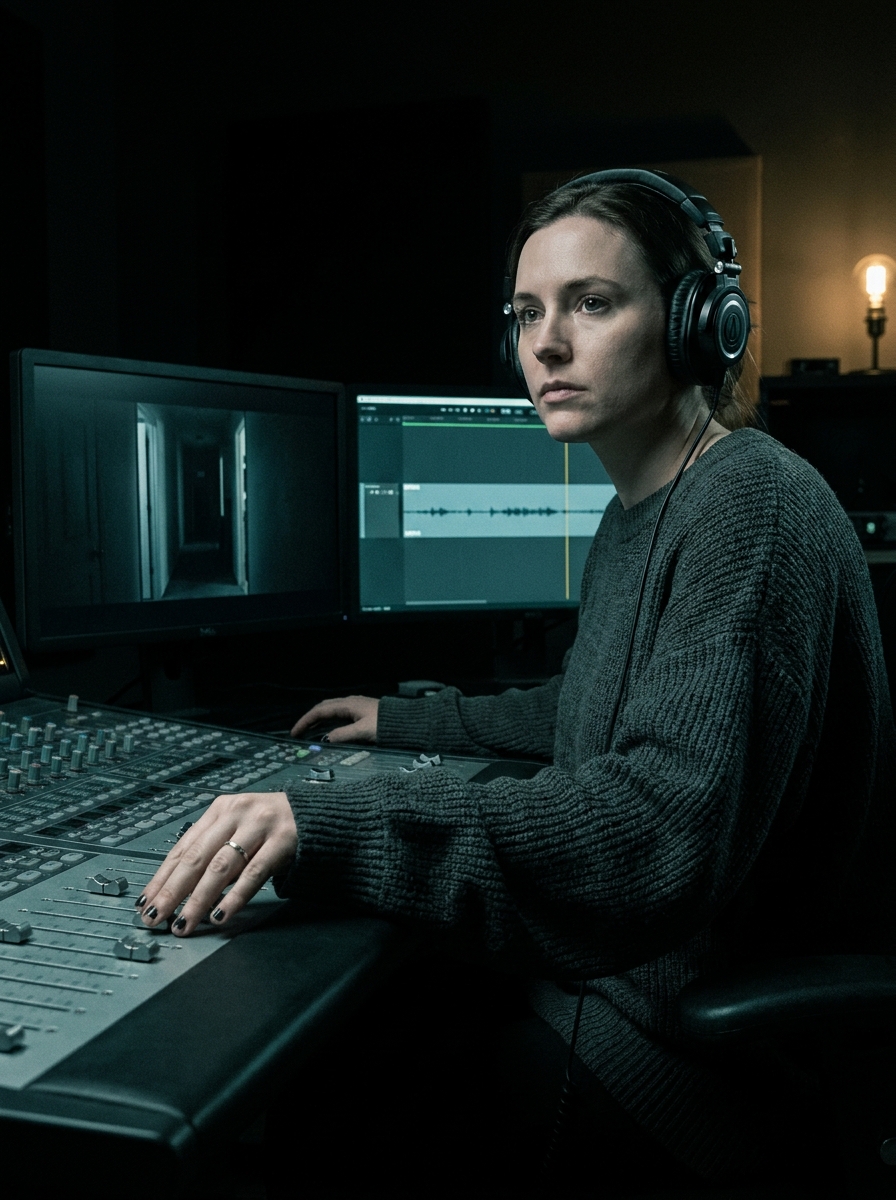
Drones, prepared piano, dissonant strings, and sound-design beds — cues calibrated for horror and thriller trailer cuts where the score does the unsettling work the picture cannot yet show.
How licensing works
Three steps. Clean, clear and simple.
- Step —01
Browse
Search the catalog by style, mood, use, instrumentation, tempo and duration or use Jessica, our AI music supervisor for assistance. Preview the results in seconds.
- Step —02
License
Direct purchase and download include nearly all licensing you will need, with the exception being in-theatre film release. Subscription-based licensing is covered by an annual blanket license.
- Step —03
Use
After payment is received for direct purchase or subscription purchase, you will have the appropriate licensing documentation in hand. You are clear to sync the music with your production.
How the library works for you
Nearly every title, ready for the scene.
Nearly every title in the catalog works the same way, built so the version you need already exists.
- 01
The full theme, plus alternates
Each title includes a theme version with all the instrumentation, and usually alternate versions with less instrumentation for quieter moments in the scene.
- 02
Broadcast lengths, included
Most titles include edits at common broadcast lengths of 60, 30, 15, and stingers, plus versions separated by sections or parts.
- 03
One standard license
The standard license covers nearly every use. The only exception is theatrical release, which requires an additional license. Contact us with a request for quote and we will respond quickly with a license that meets your requirements.
What a horror trailer cue actually delivers
The dread the picture can't show yet carried by score and design.
- 01
Sound-Design as Score
Horror trailer cues sit at the edge of music and sound-design. Drones, prepared piano hits, bowed metal, granular texture beds, and dissonant string clusters delivered as fully cleared score — usable underneath the trailer's own foley without rights collisions. Alternate versions give the edit room room to work.
- 02
Dread Without the Drop
Horror trailers do not always release. Slow-burn teasers, atmospheric first-act cuts, and trailers that hold tension to the scene-to-black ending need cues built for that — drones that pull back instead of breaking, swells that decay into nothing, and stingers placed exactly where the picture wants the audience to flinch.
- 03
Cleared for Theatrical and Streamer Launches
Master and publishing cleared at the source for theatrical, streamer, broadcast, and social horror trailer use, in-perpetuity and worldwide. The same launch trailer runs across YouTube, in theaters, on the streamer UI, and across the genre festival circuit under one license.
Proof
GMP by the numbers — for horror trailers
- in production music since 1986
- 40 yrin production music since 1986
- tracks cleared for trailer use
- 60Ktracks cleared for trailer use
- standard license covers nearly every use
- Onestandard license covers nearly every use
- in-perpetuity trailer rights
- Worldwidein-perpetuity trailer rights
Genres for horror trailer work
Five lanes inside the horror family for the scene you are building.
Horror is the parent lane, but trailer projects sit in tighter sub-genres. Cross-link to the catalogs below, or tell us about your project and we'll help you find the music you need.
Horror
The full horror catalog — drones, dissonance, prepared piano, and stingers.
Browse Horror
Ambient
Atmospheric texture beds for the quiet front of a slow-burn horror teaser.
Browse Ambient
Dramatic
Tension-led score for psychological horror and thriller crossover trailers.
Browse Dramatic
Cinematic
Hybrid orchestral cues for elevated-horror and prestige-thriller campaigns.
Browse Cinematic
Electronic
Granular synth beds and modular texture for modern sci-fi-horror cuts.
Browse Electronic
FAQ for horror trailer music
Questions trailer houses ask before pulling a horror cue.
Yes. Master and publishing cleared at the source for theatrical, streamer, broadcast, and social horror trailer use, in-perpetuity and worldwide. Festival-circuit clearance is included by default.
Yes. Catalog horror cues are tagged by structure — release, no-release, and cut-to-black — so the edit room can pull by tension shape. Many slow-burn teasers use cues that decay into nothing rather than breaking open.
About licensing horror music for trailers
The horror trailer leans on music before the picture can show why.
Horror music for trailers carries a specific burden — the cue has to do the unsettling work the picture cannot yet show. A horror teaser cannot reveal the monster in the first thirty seconds; it can only suggest. The cue is what suggests. Drones underneath the dialogue, prepared piano hits inside the pauses, dissonant string clusters that pull instead of resolve, and sound-design beds that sit somewhere between music and foley. The catalog has to be built for that edge, and the rights have to hold up to theatrical, streamer, and festival-circuit distribution at once.
GMP Music licenses horror trailer cues calibrated to that exact tension. Drones, prepared piano, bowed metal, granular synthesizer textures, and dissonant orchestral clusters are delivered as fully cleared score — usable underneath the trailer's own foley without rights collisions, with alternate versions so the edit room can hold the drone alone under the dialogue front, drop the piano hits into specific moments, or land every percussion stinger when the picture wants the audience to flinch on the editor's chosen frame. The license is master and publishing cleared at the source for theatrical, streamer, broadcast, and social horror trailer use, in-perpetuity and worldwide.
Not every horror trailer wants a drop. Slow-burn teasers, atmospheric first-act teasers, and the cut-to-black ending that defines a particular kind of elevated horror need cues built for restraint — swells that decay into nothing, drones that pull back instead of breaking, and stingers placed exactly where the picture wants the audience to flinch. The catalog is tagged by structure for exactly that — release, no-release, cut-to-black — so the trailer house can pull by tension shape rather than by tempo. License the dread the picture is still asking the audience to imagine.
Related
Adjacent pages worth a read.
Music for Trailers
The parent industry page — full overview of trailer licensing across genres and use cases.
Read
Horror Genre Catalog
The full horror catalog — drones, dissonance, prepared piano, sound-design beds, and stingers.
Read
Pricing & Licensing Models
How GMP licensing works — Web Lease Subscription, Standard Online Purchase, Blanket, and the TEMPing free trial.
Read
Scary Music for Trailers
Sibling page — pure dread and sound-design driven cues for horror trailer launches.
Read
Intense Music for Trailers
Sibling page — high-energy percussive builds for thriller and crossover trailer cuts.
Read
The horror cue your launch trailer needs