
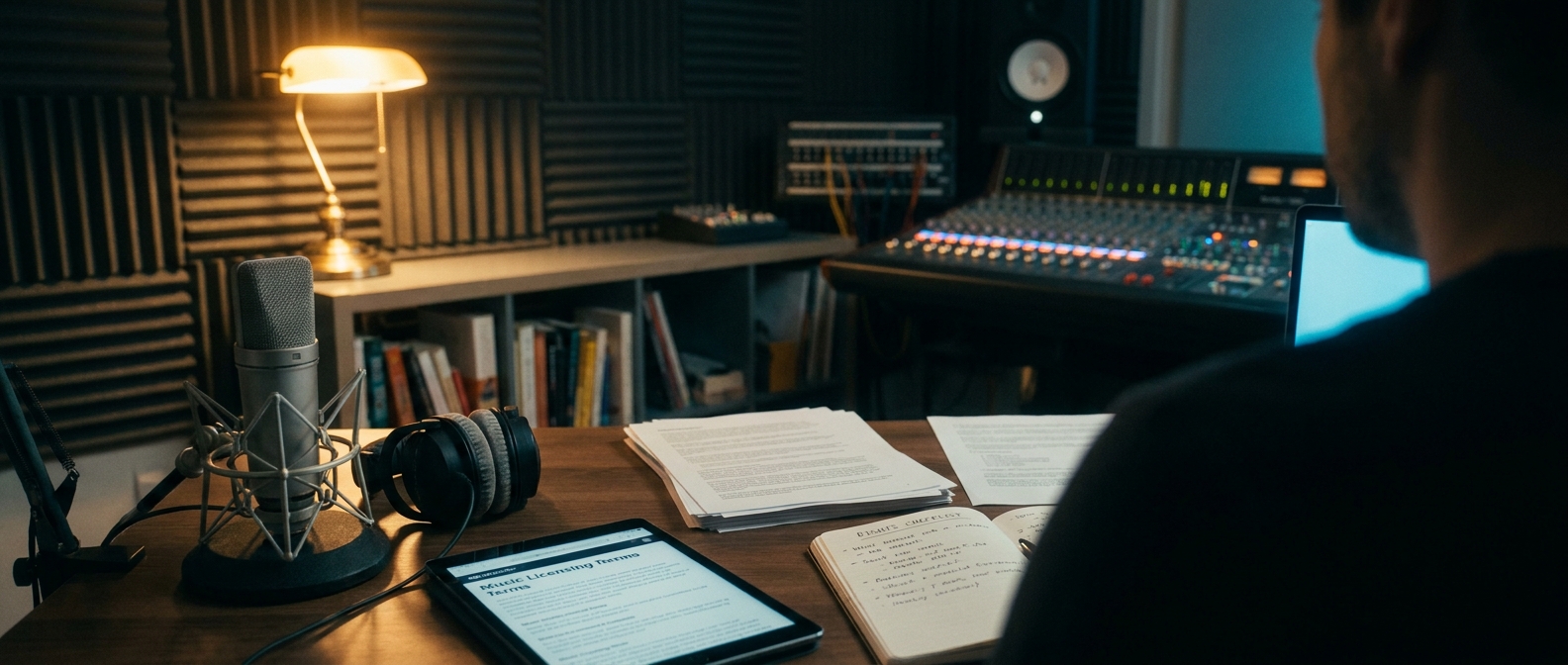
The three rights a podcast touches
A podcast has no picture, so people assume the music question is simpler than it is for film or ads. It is not, really. The instant you put a recorded track under a host read, a cold open, or a sponsor bumper, you are using music someone else owns, and you need their permission to distribute it. The permission you need breaks into three rights, and depending on the track you choose, you may need one of them or all three.
Sync
Sync, short for synchronization, is the right to pair music with content in time. The word came out of film, where a score was matched to picture frame by frame, but the law does not actually require picture. When you time a music bed to your intro script or fade a track under a transition, that is a synchronized use, and the sync right is what makes it lawful.
Master
The master is the specific recording, this performance and this mix as a file, and it is owned by whoever funded the session. That is a label, an artist, or the library that produced the cue. A master license is what lets you run that exact audio rather than re-recording the song from scratch yourself.
Mechanical
The mechanical right is the one podcasters forget, because it comes from the world of physical records and digital downloads. A podcast episode is a fixed audio file that listeners download or stream copies of through Apple Podcasts, Spotify, and the rest. Reproducing a composition inside that distributed file can trigger a mechanical obligation, which is why the underlying song, not just the recording, has to be cleared.
Why royalty-free is not always safe
Most new shows start with a royalty-free track or a clip pulled from a free-music page, and a lot of them never have a problem. That is the trap. The model works right up until it does not, and when it fails it tends to fail at the worst possible moment: after the episode is published, often after a sponsor is attached.
Royalty-free means you pay once and owe no recurring per-play royalty. It does not mean the license has no limits. Read the fine print on most free or near-free libraries and you find caps that podcast distribution blows straight through: a single-channel restriction, a term that expires in a year, a clause excluding monetized or sponsored content, or rights that cover the recording but say nothing about the composition behind it. Plenty of these tracks also sit in content-ID systems, and a podcast that gets clipped to YouTube or Reels can pick up a claim on audio the show genuinely paid for.
Library music versus licensing direct
If a show wants a recognizable commercial song under its intro, it can try to license that track directly. The path runs through a label for the master and one or more publishers for the composition, and on a co-written hit that means several rights holders who have never spoken to each other, each able to stall or decline. For a podcast budget, the math almost never works, and the timeline rarely fits a weekly publish schedule.
Production music libraries exist to collapse that grid. The library commissions and owns the catalog, so both the master and the publishing sit under one roof. You clear a cue, you get a license, you move on. The track is purpose-built to sit under voice, which is the other quiet advantage: a cue scored to leave room for a host read beats a chart single fighting your dialogue for the same frequencies.
- Direct licensing: two or more rights holders, separate negotiations, unpredictable cost, weeks to months when it clears at all.
- Stock and royalty-free: fast and cheap, but scope caps and content-ID claims surface after publish, often once the show monetizes.
- Single-source library: master and publishing cleared together, flat scope, built to sit under voice, delivered ready to drop in.
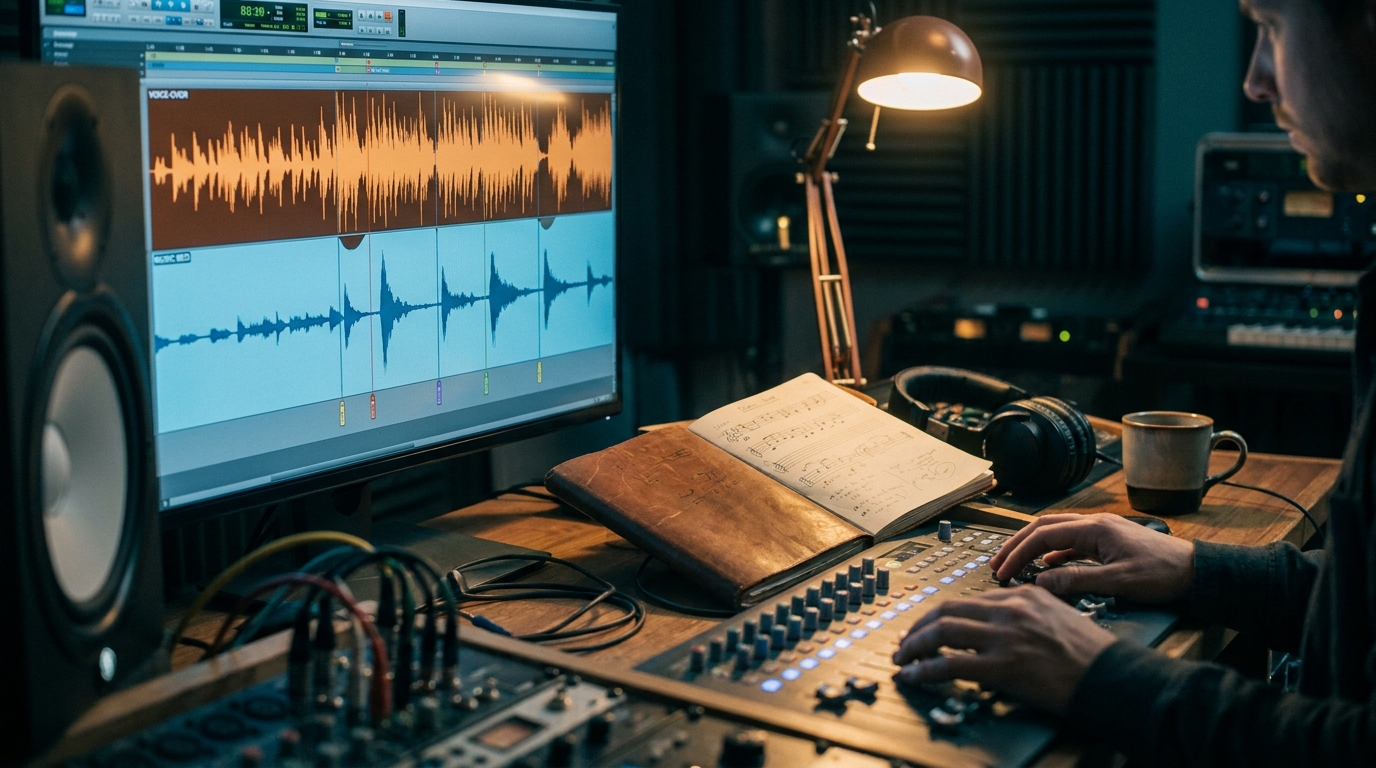
How GMP clears music for podcasts
GMP Music has run as a production library since 1986, with a catalog north of sixty thousand cleared, broadcast-ready cues. Master and publishing are held at the source for every one of them, so a single license settles all three rights a podcast touches at once. There is no second desk to chase for the composition and no separate mechanical to reconcile later.
The scope is written wide by default: worldwide, all media, cleared in perpetuity. That covers a podcast wherever it lands, Spotify, Apple Podcasts, YouTube, the show's own feed, plus the social cutdowns and the sponsored episodes, with no renewal date waiting to lapse and no upcharge when the show grows into a new platform.
On a confirmed cue and a standard use, the full mix, the stems, and the edit set deliver the same day. Send a brief instead and a curated shortlist comes back within one business day. For a show on a weekly clock, that is the difference between music being a recurring scramble and music being a decision you make once.
Common rights pitfalls to avoid
Most podcast music trouble is not exotic. It comes from a handful of assumptions that hold for a personal project and break the moment a show reaches an audience or a sponsor. A quick pass against these before you publish saves a takedown later.
- Treating purchase as permission. Buying a track on a download store grants you a copy, not the right to distribute it inside your episodes.
- Clearing the recording but not the song. The master and the composition are separate rights, and a podcast file reproduces both.
- Ignoring the sponsor clause. A license that excludes commercial use stops covering the show the day it takes paid ads.
- Assuming a term-limited license is forever. When the term lapses, evergreen back-catalog episodes are suddenly carrying uncleared music.
- Forgetting the platform spread. Music cleared for the audio feed may not be cleared for the YouTube version or the clipped Reel.
Every one of those collapses into a non-issue when one party holds both layers and writes the scope wide from the start. That is the whole reason single-source clearance exists: it takes the rights question off the producer's desk so the only call left is which cue fits the show.