
The two copyrights in every song
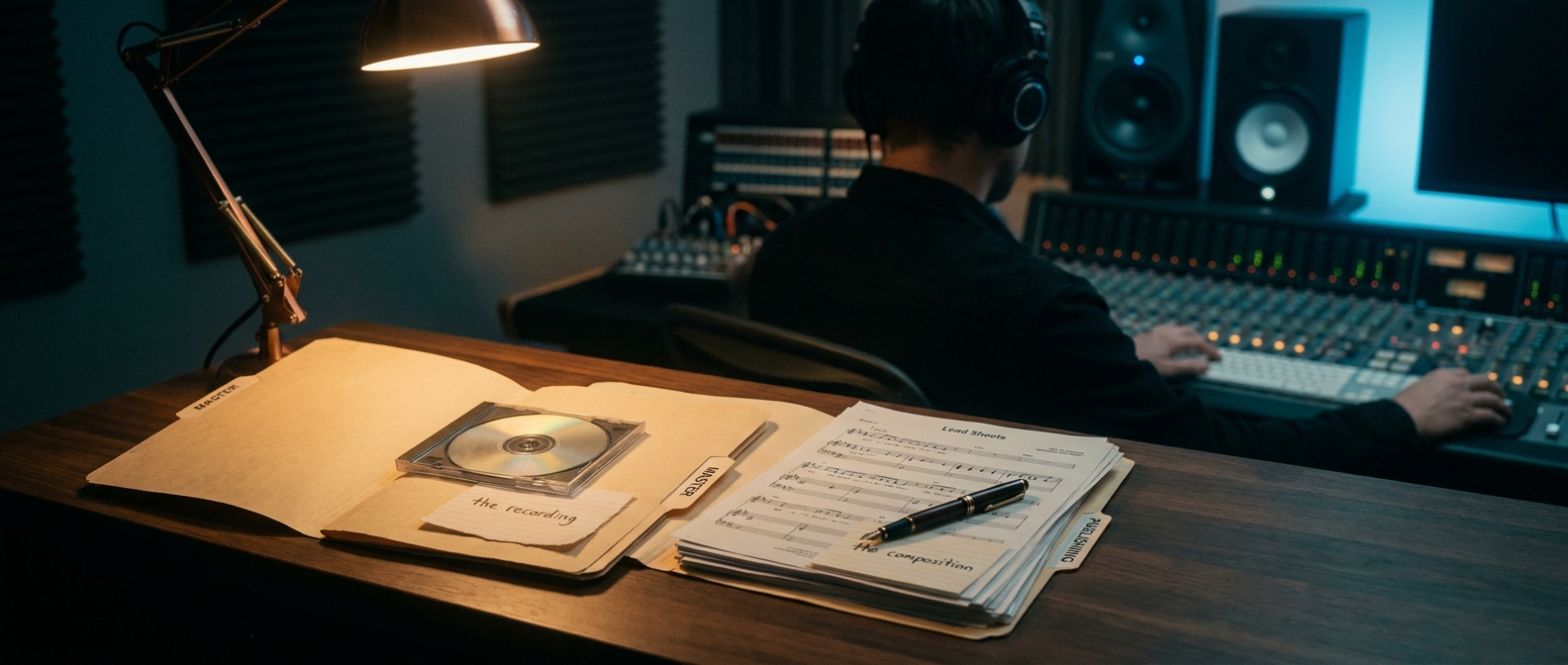
Most people picture a song as a single thing you can buy, the way you buy a book or a chair. It is not. A recorded piece of music is two separate properties stacked on top of each other, each with its own copyright and, usually, its own owner. The recording you hear is one. The underlying song, the thing that would survive if a different artist covered it, is the other.
This is not a technicality lawyers invented to bill more hours. It is the structure of how music works as property, and it is the reason master rights vs publishing rights is the first distinction anyone clearing music has to understand. Clear one and miss the other and you have not half-cleared the track. You have an exposure, because a claim can come from either side.
Who owns the master rights
The master is the recording itself. This take, this mix, this performance, this file. When you hear a specific version of a song in your head, with its particular drum sound and that one vocal ad-lib, you are hearing the master. Master rights are ownership of that captured performance, and they belong to whoever paid for the session that produced it.
On a major release that is almost always the record label, because the label fronted the studio time and the producer's fee. On an independent release it might be the artist. In a production library, it is the library that commissioned and recorded the cue. The pattern holds regardless: the money that funded the recording buys the master.
Licensing the master is what gives you the right to use that exact recording against your picture. Without it, your only legal route is to re-record the song from scratch, which means hiring players, booking a room, and producing a new master you do not own either. The master license is the shortcut around all of that, and it is half of what a real sync clearance needs.
Who owns the publishing rights
The publishing right covers the composition: the melody, the chord changes, the structure, and the lyric as written on the page. It exists independently of any one recording. Strip away the production and the publishing is what remains, the thing a hundred cover versions all share. Publishing rights belong to the people who wrote the song and, in practice, to the publishing companies they signed those rights over to.
That last part is where it stops being simple. A songwriter rarely owns their publishing outright. They assign it to a publisher in exchange for an advance and administration, which means the party you have to ask for permission is frequently a company the writer no longer controls. And on a commercial release, there is almost never just one writer.
Where the two sides diverge
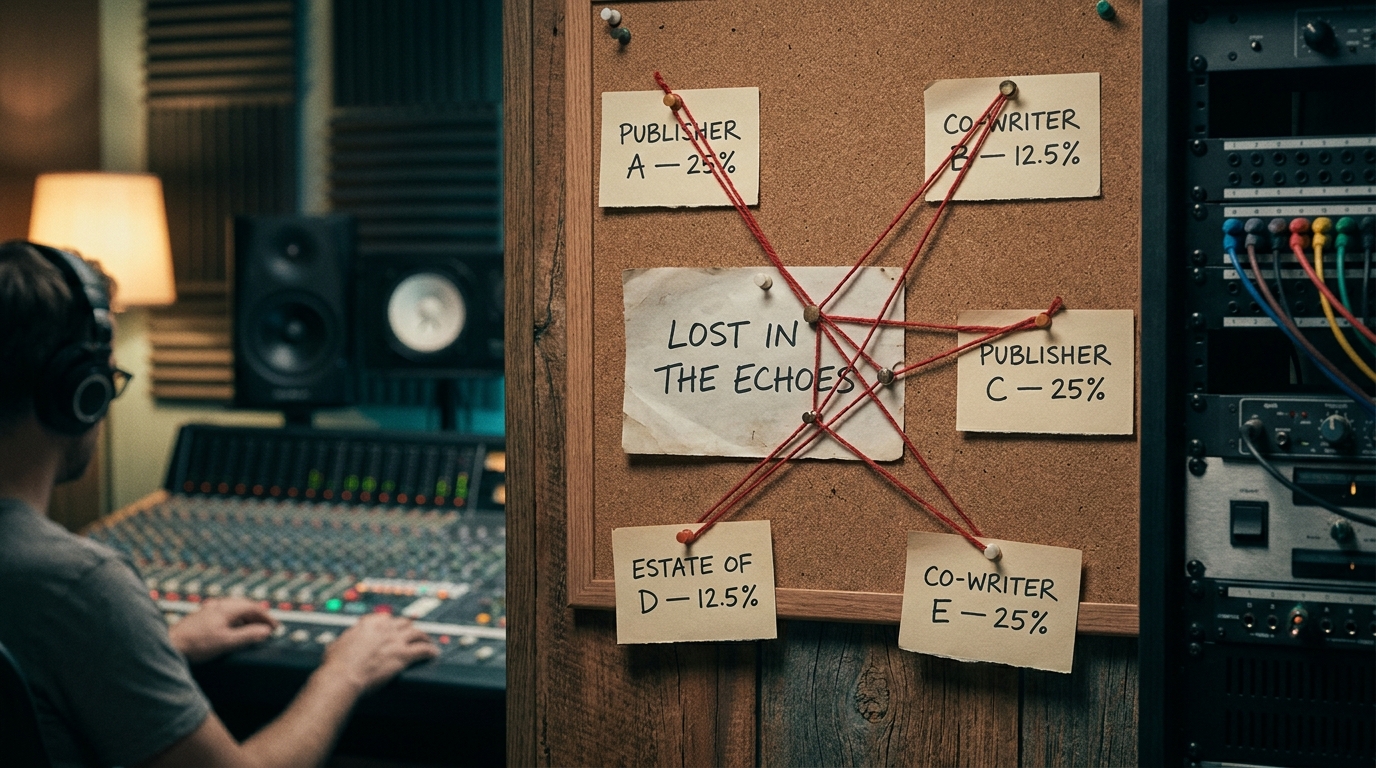
The master can have one clean owner while the publishing is fractured across five. A label might control the recording with a single signature, but the song underneath it could be split between a topline writer, a producer who gets a writing credit, a sampled source, and two publishers administering different territories. You can clear the master in an afternoon and still spend two months on the publishing.
Why publishing splits get complicated
A publishing split is the percentage breakdown of who owns the composition. On a modern pop record it can read like a contributor list, and every name on it is a person whose permission you may need, or whose publisher's permission you need, before the track can run. Any single holdout can stop the whole clearance, and they have no obligation to say yes or to say it quickly.
- Co-writers: a track with four credited writers is four sets of approvals, often routed through four different publishing companies on four different clocks.
- Publishers and sub-publishers: writers assign their rights to publishers, who assign territorial administration to sub-publishers, so the chain you negotiate is longer than the credits suggest.
- Samples and interpolations: a sampled phrase pulls in the rights holders of the source song too, which can quietly double the number of parties at the table.
- Estates and inheritance: when a writer has died, their share passes to heirs or an estate, and unanimous sign-off from multiple family members is its own kind of slow.
None of these parties has spoken to the others. Each prices their slice on their own logic, on their own timeline, and each one can veto. A music supervisor's job, much of the time, is not finding a great cue. It is assembling signatures from people who have never been in the same room, hoping none of them walks before the campaign ships.
Production music as the simple path
The reason production music exists is to take the two-copyright problem off your desk. When a single library commissions, records, and owns a cue, both copyrights live under one roof from the start. There is no split to assemble, no publisher to chase after you have already fallen in love with the track, no estate to wait on. The master and the publishing were never separated in the first place.
GMP Music owns both copyrights at the source for every track in its catalog, the master and the publishing together. One license clears them at once, so what your legal team reviews is a single signature instead of an assembled chain. The rights are written worldwide, all media, with no expiry, which means the scope question that drives label-and-publisher negotiations simply is not on the table.
That is the practical payoff of single-source ownership. The distinction between master and publishing is real and it is worth understanding, but understanding it should not be your problem to solve cue by cue. With a one-stop library, the two copyrights collapse back into one decision: does this track serve the work. Same-day delivery on confirmation, one business day on a curated shortlist, both copyrights already cleared.