
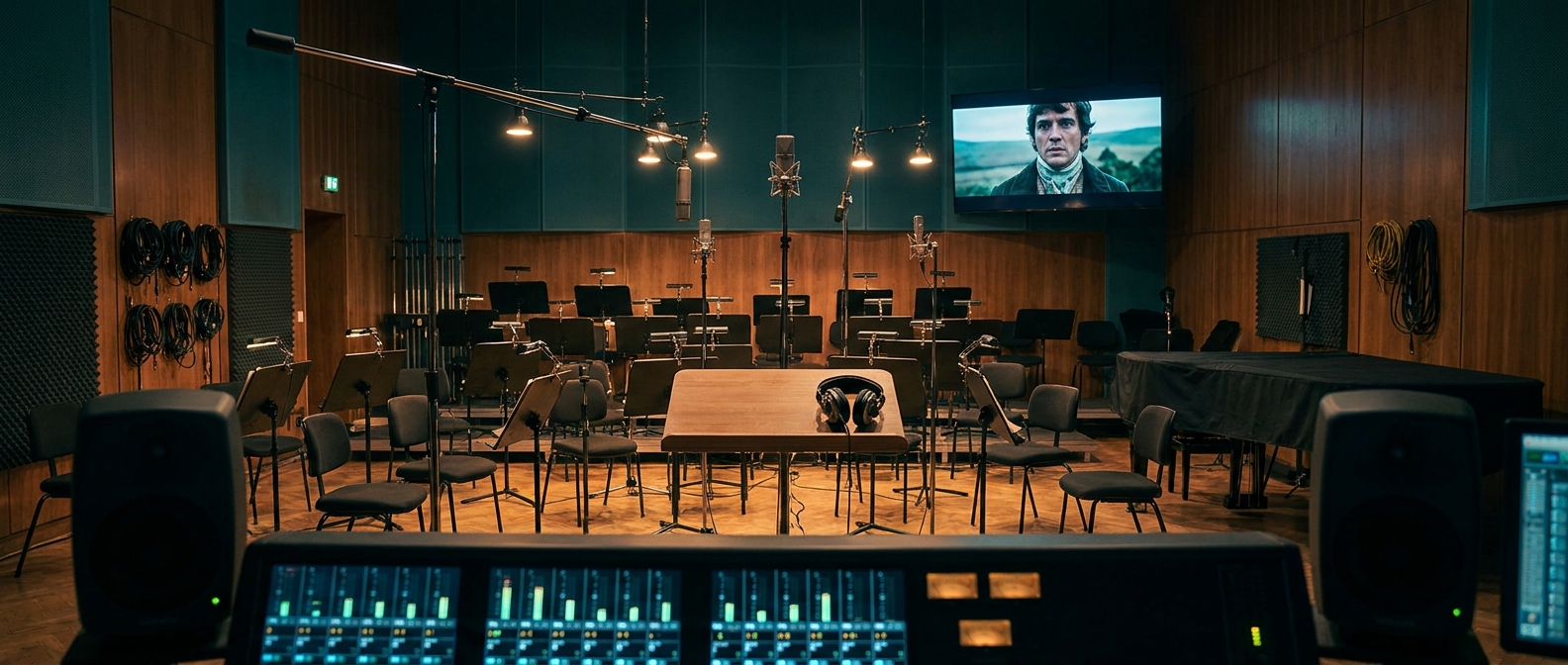
What licensing music for film actually involves
To license music for film is to clear a sync right: the permission to set recorded music against picture. The mechanism is the same one that governs a commercial or a podcast bed, but film bends it in ways the others do not. A spot runs for a campaign window and retires. A film is meant to last, to travel from a premiere to streaming to a foreign theatrical release years apart, and every cue you score in needs to hold across all of it.
That longevity is the whole problem. A recorded cue carries two copyrights, the master and the publishing, owned separately and cleared separately. On a famous song that means a label on one side and several songwriters and their publishers on the other, any one of whom can stall or refuse. Clear both for a single festival screening and you may still own nothing the day a distributor wants worldwide rights. The two-rights structure does not change between film and any other use. What changes is how badly an incomplete clearance comes back to bite you.
Festival cut versus distribution cut
Most music-clearance disasters in independent film trace to one mistake: clearing for the festival and assuming the distribution cut comes free. It does not. A festival license is often narrow on purpose, granted for a handful of screenings in defined markets, sometimes at a courtesy rate because the rights holder knows the exposure is limited. The moment a buyer takes the film wide, that grant evaporates, and the song you built a scene around has to be re-cleared at full freight or cut.
The festival window
Festival rights typically cover non-theatrical exhibition in named territories for a set term. They are cheap because they are small. The trap is that the locked cut you screen at the festival becomes the cut everyone falls in love with, including you, and tearing a cue out of a finished scene to satisfy a clearance gap is the worst kind of late edit.
The distribution window
A distributor wants the rights they intend to exploit: worldwide theatrical, streaming, broadcast, home media, often in perpetuity. If your cues were cleared for a festival and nothing more, every one of them reopens here, on a deadline, with a sales agent watching. Clearing for the distribution cut from the start is more work up front and far cheaper than re-clearing under acquisition pressure.
The three budget paths
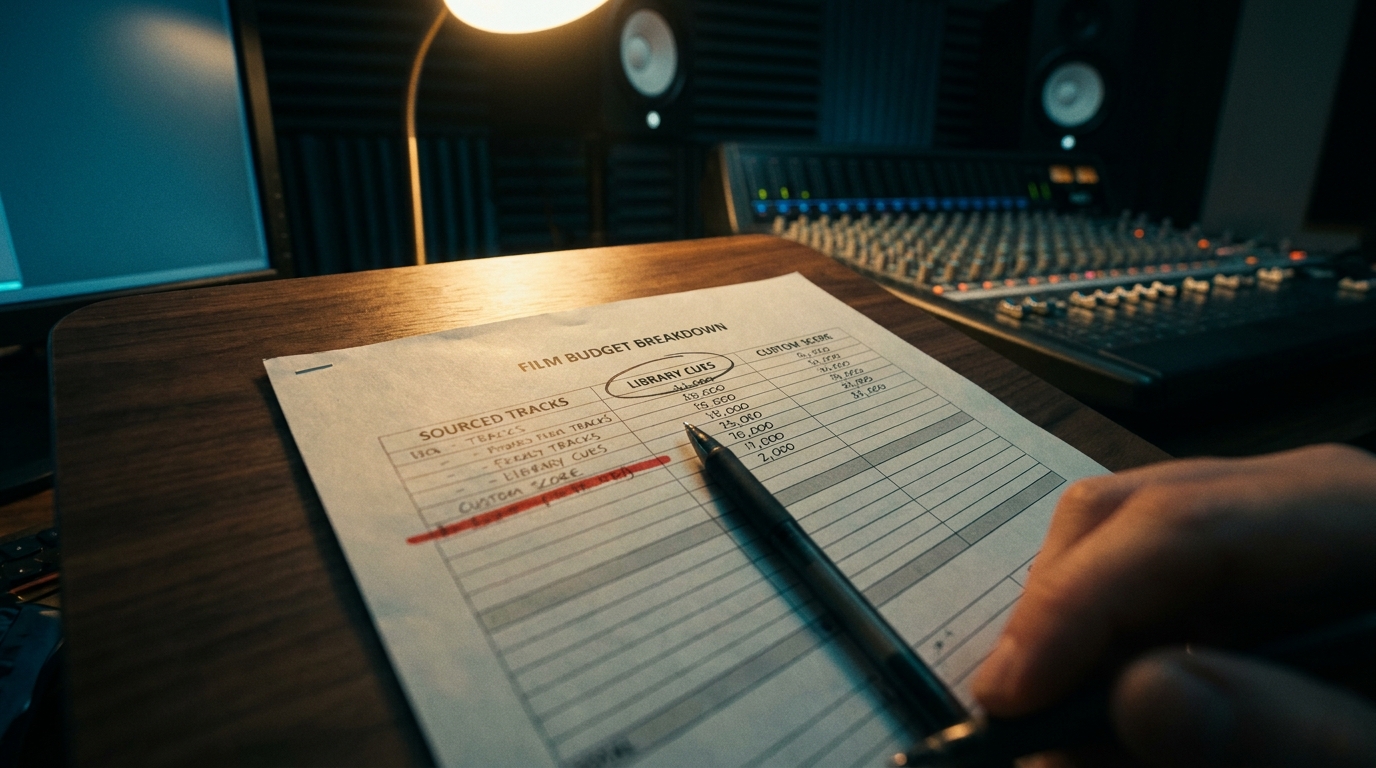
Every film resolves its music through one of three approaches, and most use all three across a single picture. Knowing which path a given cue belongs on, before you fall for it in the timeline, saves the production from clearances it cannot afford.
- Sourced songs: licensing a known commercial recording from a label and its publishers. Highest impact for a needle drop, highest cost, slowest to clear, and the path most likely to collapse at the last desk.
- Library cues: pre-cleared production music where one party holds both rights and writes a flat scope. Predictable cost, fast turnaround, broadcast-ready, and built to travel from festival to distribution without renegotiation.
- Composed score: an original score written to picture. Total creative control and clean ownership, but the longest lead time and a real line item for a composer, session players, and a mix.
The honest version of most indie film budgets is a composed or library spine carrying the picture, with one or two sourced songs reserved for the moments that genuinely earn a recognizable record. Spend the sourced budget where the audience will feel it, and let a library carry the montages, the transitions, and the background source music a composer would otherwise bill for. That is where a catalog like GMP does the quiet structural work that keeps a film on schedule.
Cue sheets and the music-supervisor workflow
Two documents govern the music on a finished film, and getting them right is what separates a clean delivery from a held-up one. The first is the clearance paper trail, the licenses proving every cue is cleared for the windows the film will play. The second is the cue sheet, the frame-accurate log of every piece of music, its timing, its writers, and its publishers, which broadcasters and performance societies use to pay royalties downstream.
A music supervisor sits over both. The job is to spot the picture, pull candidate cues against the cut, manage the clearances, and hand the production a cue sheet that a distributor's delivery checklist will accept without a single open question. On a sourced song, that means tracking master and publishing separately through whoever controls each. On a library cue, it collapses to one entry with one rights holder, which is why supervisors lean on production music for everything that does not need a marquee record.
Stems matter more in film than almost anywhere else. A scene runs long, a dialogue line lands over the swell, a director wants the strings gone for eight bars and back after. With stems standard on every cue, the re-recording stage or the music editor handles that in the room. Without them, every adjustment is a request back to a rights holder who may or may not answer before the lock.
GMP for indie and studio film
Production music carries a dated reputation in narrative film, the assumption being it is fine for a corporate reel and thin for a feature. That has not been true for a long time. A catalog built and cleared for broadcast holds up against picture, and the structural advantages it brings to a film are exactly the ones a tight budget and a moving delivery date reward.
For independent film
Indie productions clear music on a shoestring with no margin for a clearance that breaks at acquisition. A flat-scope, worldwide, in-perpetuity license removes the single largest risk in the whole music budget: the cue you built a scene around failing when the film finally sells. Reserve the sourced money for one needle drop and let the catalog carry the rest, fully cleared from the first screening.
For studio and post houses
Post houses and studio productions work to delivery dates that do not move. The value here is throughput: a curated shortlist back within one business day, watermarked WAVs to audition against the cut, and same-day delivery of mix, stems, and edit set on confirmation. With stems and the pre-built duration set in hand the moment the cue clears, a temp cue becomes a final cue without a new contract.