
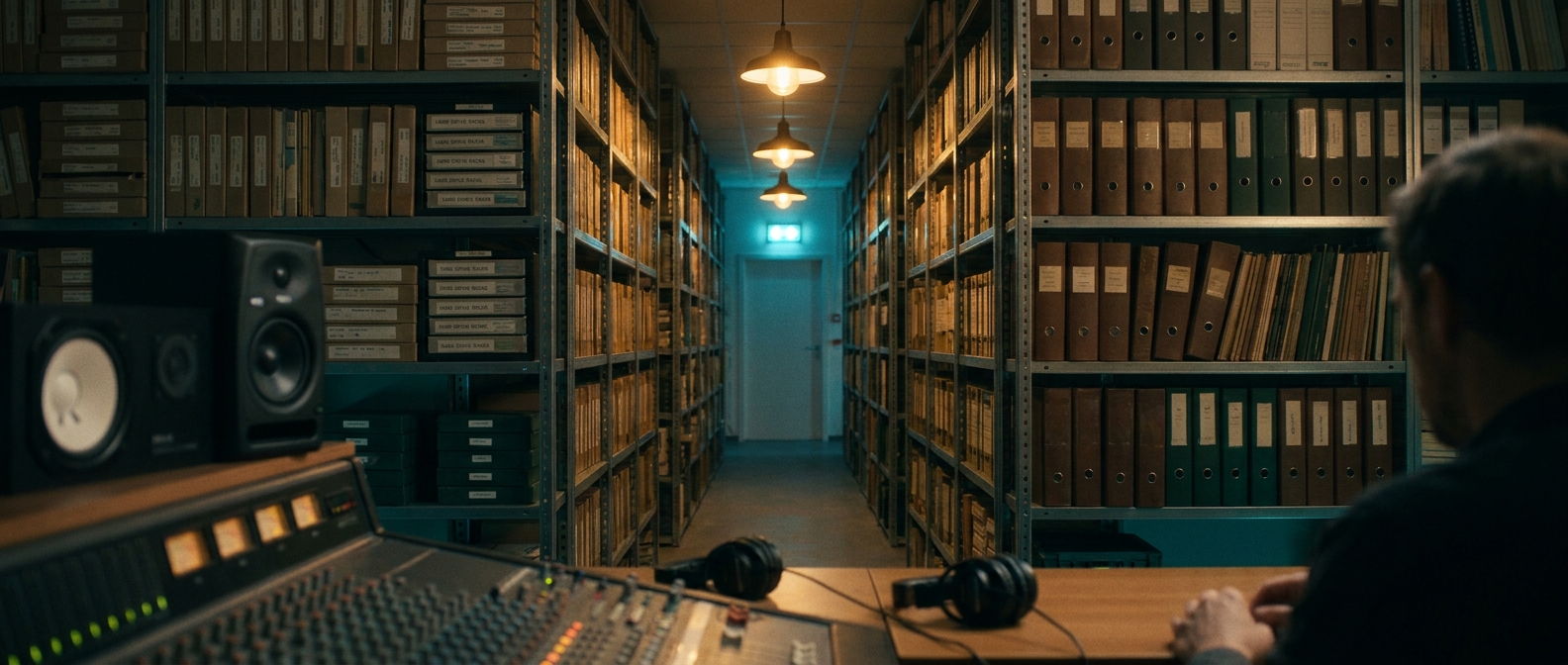
What a production music library is
A production music library is a catalog of original music written, recorded, and owned specifically so it can be licensed for use against picture. The tracks are not chasing radio play or a streaming chart. They exist to do a job: to run under a commercial, sit under a documentary, open a podcast, or carry a brand film. Because the library commissioned the music, it can clear it cleanly, and that is the whole point of the model.
Production music goes by a few names. You will hear it called library music, stock music when people are being loose, or sometimes catalog music. The label that matters is the one buyers care about: the music comes pre-cleared, ready to drop into a paid project without a chain of negotiations behind it. What you audition is what you can license, on terms that are already written.
Where the model came from
The idea is older than most of the people using it. In the 1920s and 1930s, as sound came to film and then to radio, producers needed music they could use on demand without commissioning a fresh score for every cue. Publishers in Europe and the United States started recording catalogs of generic, mood-keyed pieces and licensing them by the use. A newsreel needed urgency, a serial needed menace, a romance needed strings, and the library had a cue waiting on the shelf.
Television multiplied the demand. Game shows, soap operas, local stations, and industrial films all needed wall-to-wall music on schedules that ruled out bespoke scoring. By the time cable, corporate video, and then the web arrived, the library model had hardened into an industry of its own. The format changed from vinyl to CD to the searchable digital catalog, but the bargain never did: original music, written to order, cleared in advance, priced by use.
How it differs from labels and royalty-free
A production library sits between two things people often confuse it with. On one side is the commercial label catalog, the recognizable songs. On the other is the royalty-free or stock pool that markets itself on price. The library is neither, and the differences are exactly what make it usable on a deadline.
Against the label route
Licensing a known song means clearing two separate rights, the master and the publishing, from parties who may have never spoken to each other. Co-writers, publishers, and a label all have to sign, and any one of them can stall or kill the deal. A library commissioned its own music, so it holds both rights itself. There is one party to say yes, and the number is knowable before you commit.
Against royalty-free stock
Royalty-free pools win on the first invoice and lose on the second. The licenses are often term-limited, narrow on territory, or vague about what broadcast and paid media actually cover. The same track sells to everyone, so exclusivity is off the table, and the fine print tends to surface only when a claim lands or a renewal comes due. A real production library writes a scope you can hand to legal once and forget.
How the business model works
Underneath the catalog is a fairly simple arrangement. The library commissions composers to write and record original music, takes ownership of the resulting masters and compositions, and then licenses that music out to whoever needs it. Composers are paid up front, through royalty splits, through performance royalties when the music airs, or through some mix of the three. The library carries the rights and the risk so the buyer does not have to.
That ownership is what lets a library do the things a label cannot do casually. It can write a flat license, set a default scope, and deliver the pre-built duration set and stems alongside the full mix as a single package, because there is no second owner to consult. The catalog is the asset, and keeping it cleared, organized, and searchable is the actual business.
- Commission: original music written and recorded to brief, not licensed in from elsewhere.
- Ownership: the library holds master and publishing, the two rights a sync use depends on.
- Clearance: rights are pre-settled, so a license can issue without a fresh negotiation.
- Delivery: full mix, stems, and pre-built durations ship as one package, not as add-ons.
Who curates it and who licenses it
A catalog of sixty thousand tracks is only useful if someone can find the right four in an afternoon. That is curation work, and it never stops. People tag tracks by genre, mood, tempo, and instrumentation, build the metadata that search runs on, and keep the shelves legible as the catalog grows. Behind a good library is a team that listens for a living, not an algorithm guessing at vibes.
The curation side
Music supervisors and catalog editors decide what gets commissioned, how it is described, and which cues surface for a given brief. They translate a vague request, something warmer, more hopeful, less corporate, into a shortlist that actually fits the cut. The better the curation, the less time a buyer spends auditioning the wrong thing.
The licensing side
On the other end are the people clearing music for paid commercial work: brands, agencies, post houses, and creators with a deadline and a legal department. They are not hobbyists hunting for a free download. They need a cue that clears cleanly, a license that holds up, and delivery that lands before the cut locks. The library exists to serve that audience first.
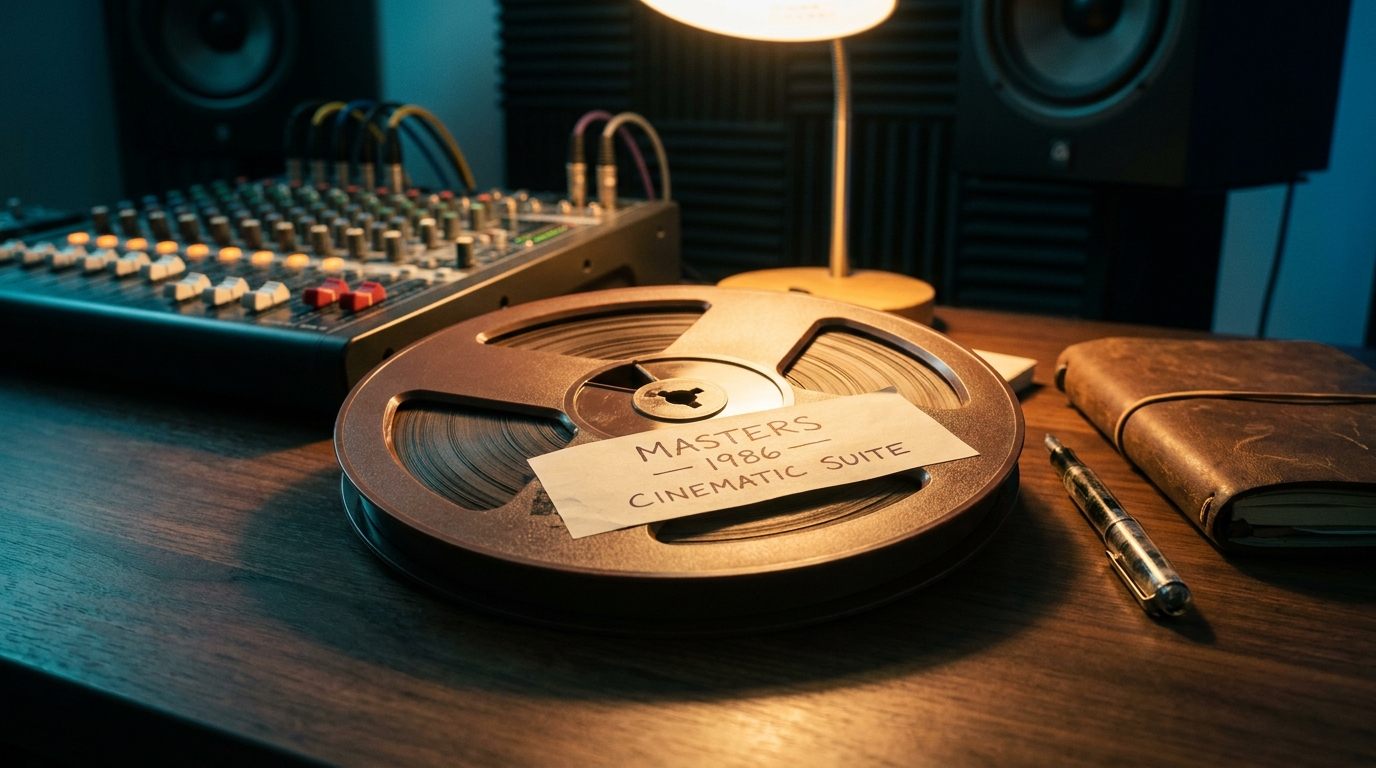
GMP Music, in continuous operation since 1986
Gene Michael Productions has run as a production music library since 1986, out of Niles, Michigan, through every format shift the industry has been through. The catalog now runs past sixty thousand cleared, broadcast-ready tracks, all owned at the source, which is the part that lets the licensing stay simple while the library stays large.
In practice that means one license clears master and publishing together, worldwide and with no end date, with no renewal clock and no scope upcharge waiting two years out. Tracks ship with stems and pre-built durations as standard. Confirmed cues deliver same-day, and a sent brief comes back as a curated shortlist within one business day. The model is old. Keeping it fast is the work.