
The advertising music landscape
Advertising is the most music-hungry corner of the commercial world, and the most exposed. A brand does not run one asset anymore. It runs a hero film, a dozen social cutdowns, an out-of-home loop, a pre-roll edit, and an internal sales-kickoff version, and every one of those carries music that someone has to clear. The track is the same. The number of places it has to be legal is not.
That breadth is why licensing music for advertising is less a single purchase and more a scope problem dressed up as a creative one. The creative team falls for a cue in a rough cut. The work of making that cue lawful across every channel the campaign will touch lands on someone else entirely, usually weeks later, usually under a deadline that has already moved twice.
How the request moves through an agency
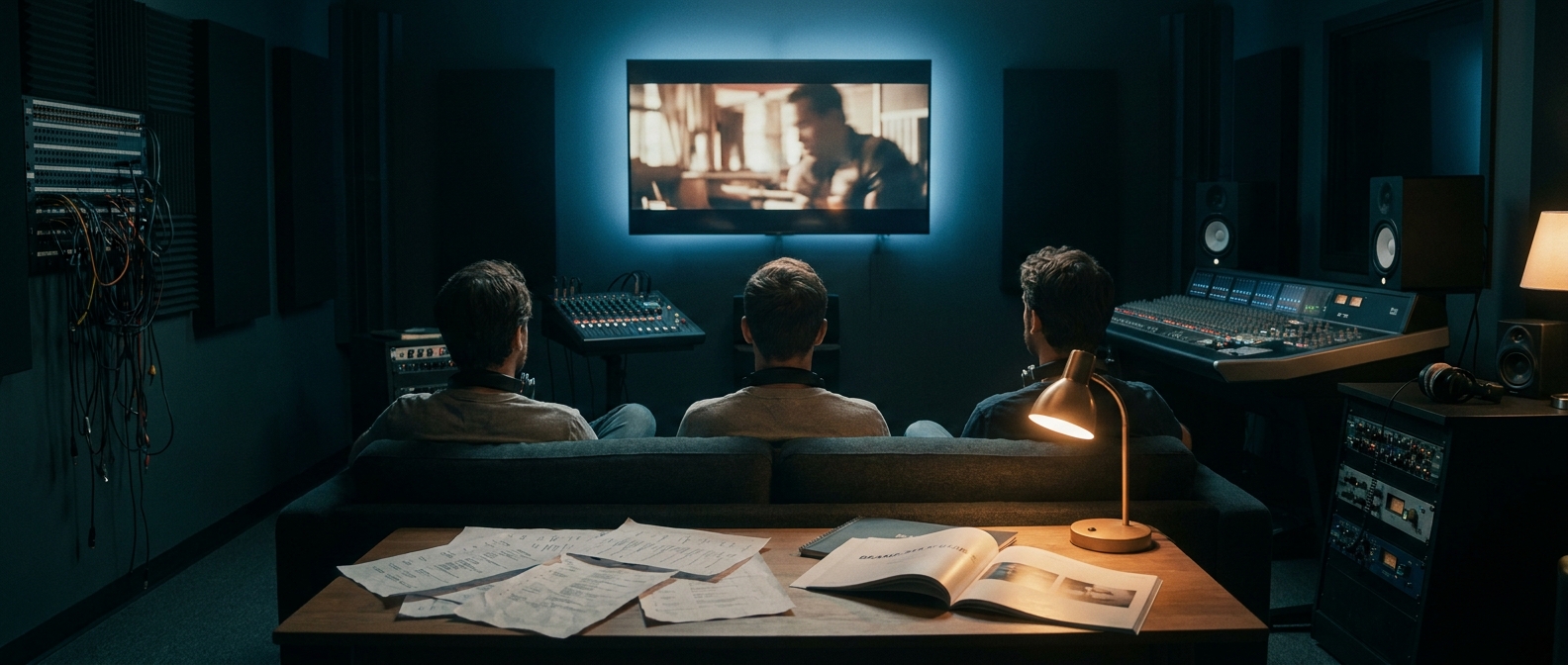
Inside an agency, music is a relay, not a decision. The cue passes through several hands before it is cleared, and each handoff is a place the timeline can stall. Knowing the order helps you see why a track everyone loved on Tuesday is still unsigned the following Monday.
The creative pick
A creative director, editor, or music supervisor lays a cue against the cut. At this stage nobody is thinking about rights. They are thinking about whether the spot lands. The danger is that the temp track becomes the reference everyone falls in love with, and then will not clear.
Business affairs and clearance
Business affairs inherits the pick and has to make it real. They confirm who owns the master, who owns the publishing, what the quote is for the territory and media the client bought, and whether the deal closes inside the air date. This is the desk where famous tracks die quietly and where production music quietly sails through.
Procurement and client sign-off
On larger accounts, procurement reviews the spend and the paper before the client signs the invoice. They want a predictable line item, clean rights, and no clause that triggers a second payment when the campaign extends. A flat, perpetual, worldwide license reads cleanly here. A term-limited royalty-free receipt with murky scope does not.
Three routes a track can take to clear
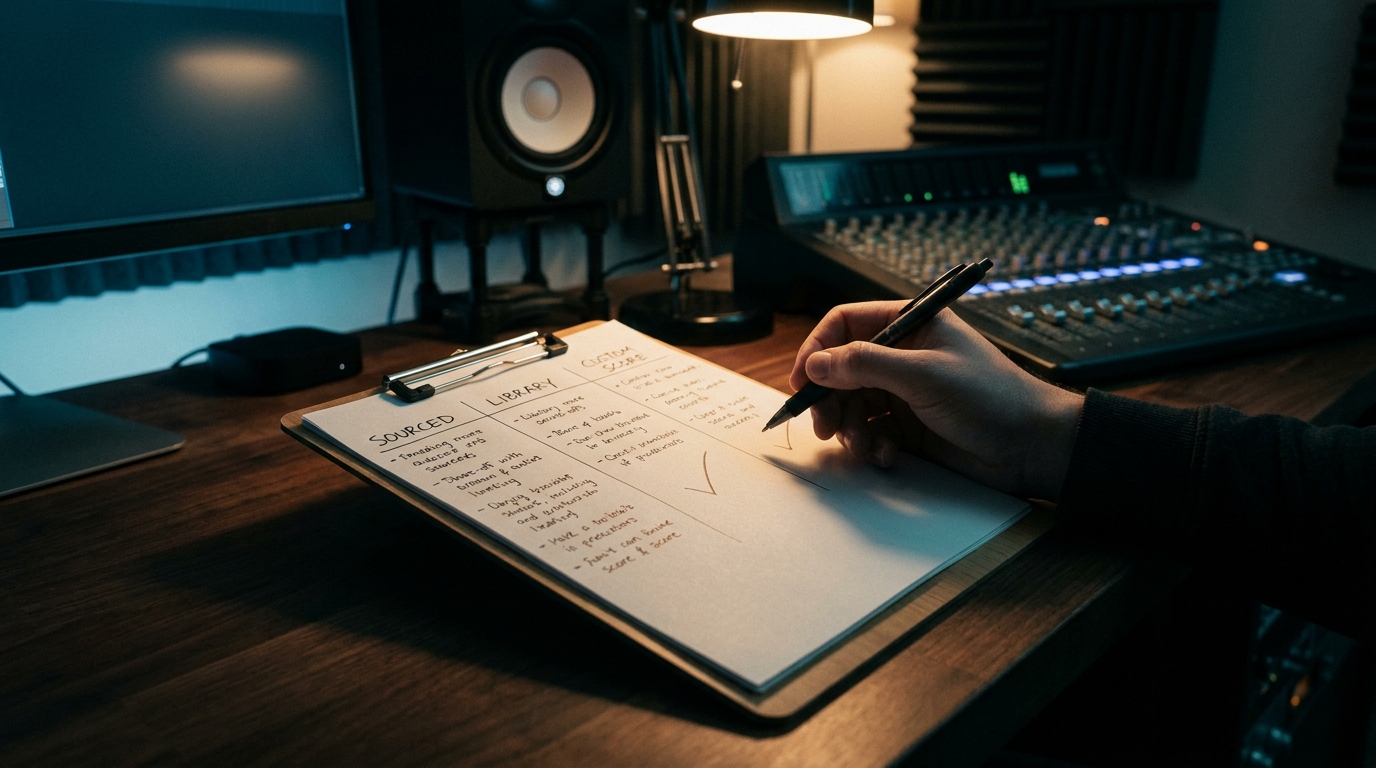
Every cue that ends up in an ad reached the screen by one of three paths. They differ wildly in cost, speed, and certainty, and most campaigns end up mixing them. Knowing which route a given cue is on tells you how nervous to be about the air date.
- Sourced commercial music: a known release licensed direct from a label and its publishers. Highest recognition, highest cost, slowest clearance, and the only route where the deal can still collapse the week before air.
- Production music: pre-cleared catalog cues written to be licensed for picture, where one party holds master and publishing together. Predictable rate, fast turnaround, broadcast scope built in.
- Custom score: a composer writes original music to the cut. Full creative control and clean ownership, at the cost of lead time and budget the calendar may not allow.
The sourced route gets the headlines, so buyers assume it is the default. In practice it is the exception. The overwhelming majority of advertising music, including a great deal of work that sounds bespoke, runs on production cues and custom scores precisely because those two routes make the air date a fact rather than a hope.
Why agencies lean on production libraries
Agencies are not choosing production music because it is cheap. They are choosing it because it is governable. When a campaign extends from a national flight into a second market, or a thirty becomes a fifteen, or a one-off spot becomes evergreen content, the music has to keep up without reopening a negotiation. A library cue cleared worldwide and in perpetuity already covers that move.
There is also the matter of risk sitting on the agency's name. A national spot with a half-cleared track is a public liability the moment it airs, and the exposure does not land on the freelancer who suggested the song. It lands on the agency that delivered the master. Single-source clearance removes the chain-of-signatures problem that creates that exposure.
The GMP licensing model
Gene Michael Productions has run a production music library since 1986, and the model is built around the failure points above. Master and publishing are held at the source, so one license clears both rights in a single signature. The default scope is worldwide, all media, in perpetuity, which means broadcast, streaming, social, theatrical, out-of-home, and internal use are covered without a renewal date or a scope upcharge waiting down the line.
For an agency clearing music across a full campaign, that default is the point. The cue you approve for the hero film is already legal on the pre-roll, the TikTok cut, and the lobby screen, with no second quote and no expiry to track.
- Search the catalog directly, or send a brief and get a curated shortlist back within one business day.
- Audition watermarked WAVs against the cut until a cue locks with the client.
- Confirm the cue and the use. We issue a flat-rate, perpetual, worldwide license with no scope negotiation.
- The full mix, stems, and the 60/30/15/stinger/loop edit set deliver same-day on confirmation.