
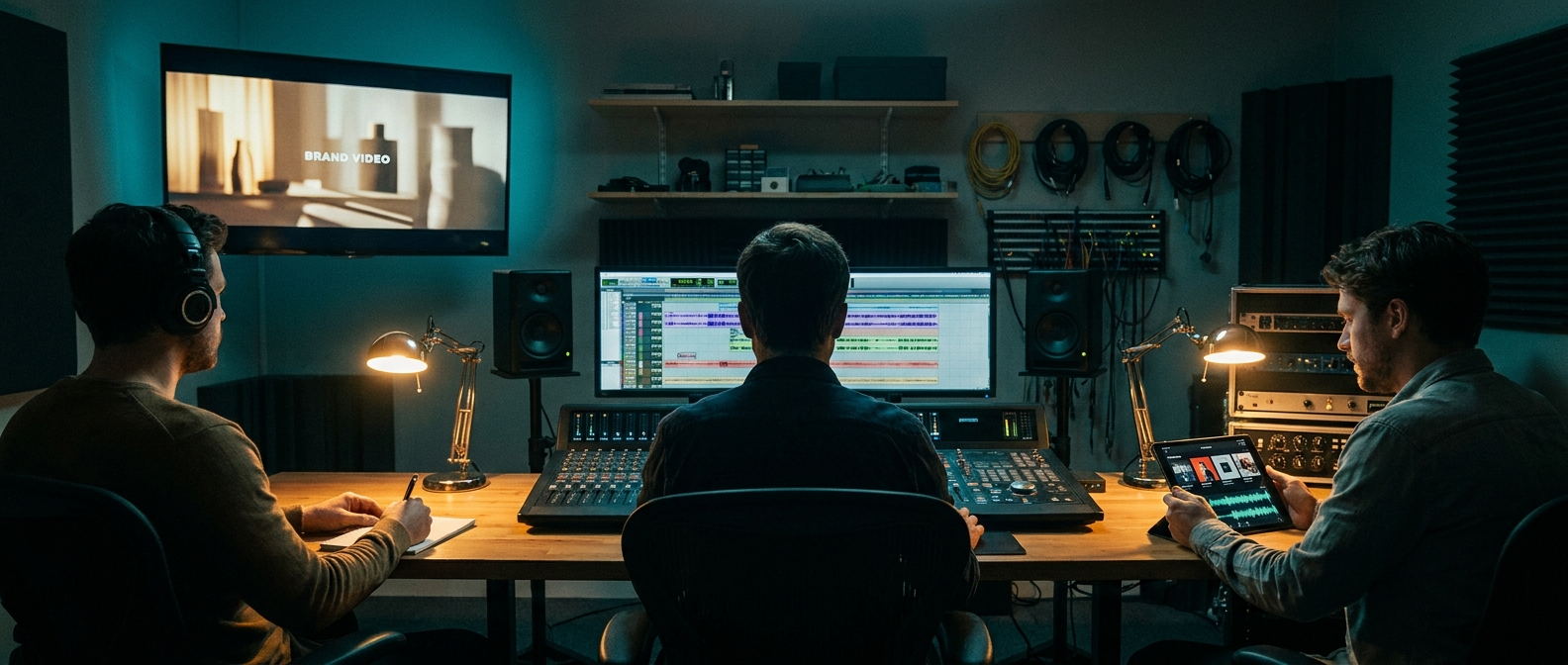
Brands and in-house marketing teams
A brand running its own creative wants the spot to feel like the brand and nothing else. The person clearing the track is usually a marketing lead or a brand manager, not a music specialist, and the brief tends to arrive in adjectives: warm, confident, premium, modern. They are not auditioning a hundred cues. They want a short list that already sounds like them.
The typical brief
Music for a launch film, a product hero, a series of social cutdowns, and the internal sizzle reel that goes to the board. One sonic identity across all of it, often with matched durations so the 60, the 30, and the 15 feel like one campaign rather than three edits fighting each other.
Why a library over the alternatives. A brand team rarely has the appetite or the legal bandwidth to clear a known commercial release, and a free stock track on a paid campaign is the kind of risk that ends up in front of counsel. A production library gives them a defensible clearance and a sound they can own across an evergreen campaign without a renewal clock. GMP holds both rights at the source and writes perpetuity by default, which is exactly the answer a brand manager needs when the legal team asks what happens to this license in three years.
Agencies and creative shops
Agencies are the most demanding buyer in the catalog, because they are juggling someone else's money and their own reputation in the same meeting. The creative director or producer needs cues that survive a client review, and they need options on the table fast enough that the music conversation does not become the thing that pushes the deadline.
The typical brief
Three to five distinct directions for the same cut, so the client has something to choose between rather than a single take-it-or-leave-it track. Then edits against a locked picture once a direction wins, often under same-week pressure, sometimes with a creative who keeps asking whether the bridge can hit harder.
- Send the brief and the cut. A curated shortlist returns inside one business day.
- Walk three to five directions into the client review with watermarked WAVs.
- Lock the direction and the duration from the pre-built edit set.
- Confirm the use and get a flat-rate license, with the master and edit set delivered same-day.
Why a library over the alternatives. Agencies have lived through the label-and-publisher chain, where a single famous cue means weeks of negotiation across parties who have never spoken. A production library collapses that into one signature. For a shop billing by the hour against a fixed client budget, predictable scope and a one-day shortlist are worth more than the bragging rights of a name track.
Post houses and edit rooms
Editors and post supervisors are the buyers who actually live inside the music after everyone else has moved on. They are not picking a cue for how it sounds in isolation. They are picking it for how it behaves once it is sitting under dialogue, ducking for a VO, and getting cut to a frame that the director will inevitably move tomorrow.
The typical brief
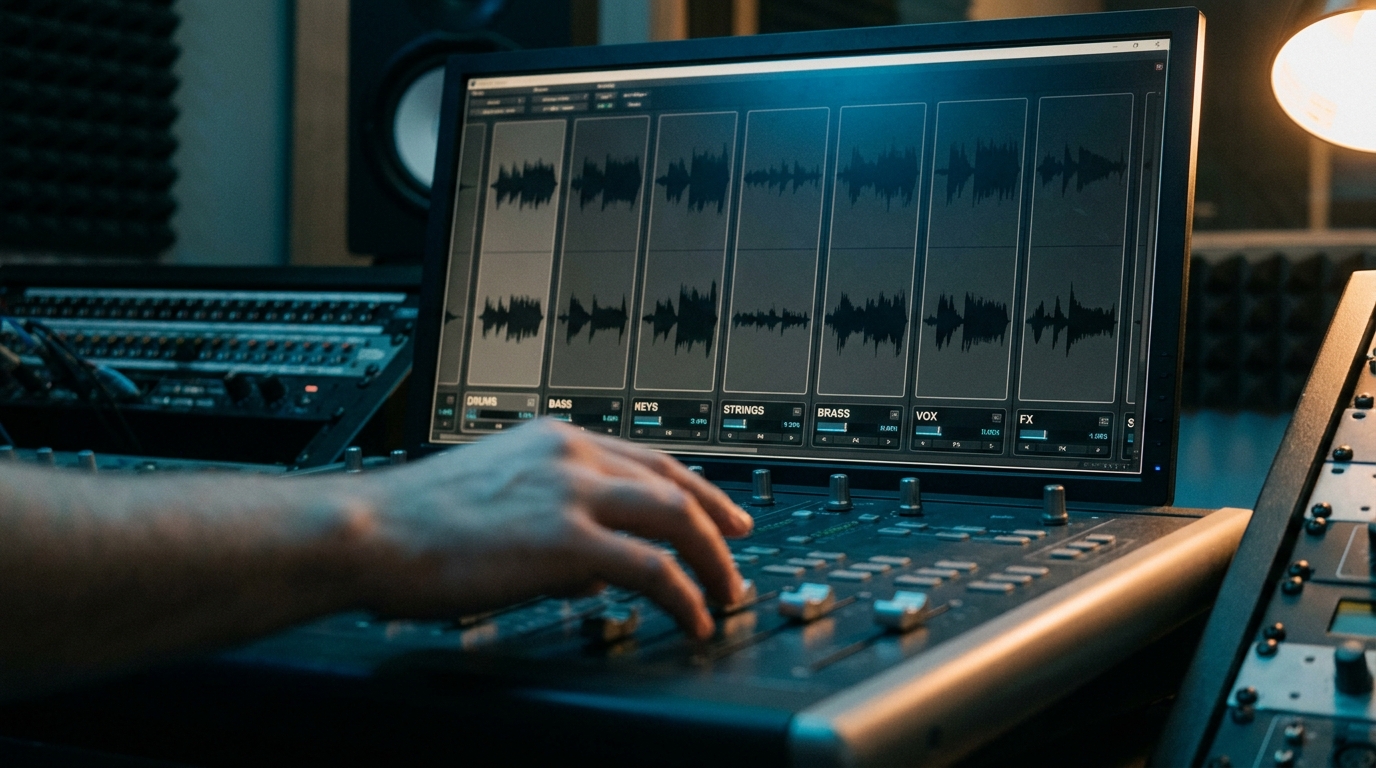
Stems, always. The edit room needs to pull the drums out for a quiet beat, push the strings up for a swell, and mute the lead so the dialogue breathes. They also need clean pre-built durations across the 60/30/15/stinger/loop set so the cue fits the timeline without crude chopping. A flat full mix with no parts is, to a post house, a half-delivered file.
Why a library over the alternatives. Post houses inherit whatever the client or agency hands them, and what they dread is a track that cleared the legal review but did not ship the parts. A single-source library that delivers stems and an edit set on confirmation removes the back-and-forth that otherwise eats an afternoon every time the picture changes.
Broadcasters and networks
Broadcasters are the original production-music customer, and they buy differently from everyone else on this list. A network is not clearing one track for one spot. It is scoring promos, idents, bumpers, news beds, and an entire season of episodic content, often under a blanket arrangement, with a compliance department that treats an uncleared cue as a genuine air risk.
The typical brief
Volume and certainty. A deep, well-tagged catalog the in-house team can search at speed, cues that hold up across broadcast, cable, and the streaming simulcast, and clearance documentation clean enough to satisfy a standards-and-practices review without a follow-up email.
Why a library over the alternatives. At broadcast volume, negotiating individual sync deals is a non-starter. Networks need a catalog that is cleared the same way every time, with worldwide all-media rights written as the default so a promo that gets re-cut for international does not trigger a fresh negotiation. A catalog in continuous operation since 1986, sixty thousand tracks deep, is a known quantity to the people whose job is to keep uncleared audio off the air.
Creators, podcasters, and studios
The newest buyer profile is also the fastest growing: independent creators, podcast networks, game studios, and e-learning shops producing monetized content at a real cadence. They look like hobbyists from the outside and behave like broadcasters in the one way that matters, which is that their work is paid, public, and platform-monetized, so a content claim is lost revenue, not a minor annoyance.
The typical brief
A loopable bed under a podcast, a cue that will not get flagged by a platform content-ID system, intros and stingers that match across an episode run, and music for a game cinematic or a course module that ships worldwide on day one. The fear is specific: the dreaded copyright strike on a channel that pays the rent.
Why a library over the alternatives. Creators usually start in the royalty-free pool and graduate out of it the first time a free track gets claimed, or expires, or turns up on a competitor's channel because nothing about it was exclusive or cleared. A production library gives them broadcast-grade clearance at a working pace, with stems and pre-built durations they can reuse across a whole content slate.
How one catalog serves all five
The reason a single library can answer a brand manager and a network compliance officer in the same week is that the hard part is identical for both. Master and publishing held together, cleared in perpetuity, stems standard, pre-built 60/30/15/stinger/loop durations, and worldwide rights as the default. Each profile leans on a different corner of that package, but none of them has to ask for it specially.
What differs is the front door. A brand searches by mood and ends up with a campaign-wide identity. An agency sends a brief and gets a shortlist back inside a business day. A post house opens the stems. A broadcaster searches at volume against a clean clearance record. A creator licenses a cue that will not get struck. The catalog underneath is the same sixty thousand tracks. The workflow just meets each buyer where the deadline is, and delivers same-day once the cue and the use are confirmed.